




Blog: Category Archives: Libraries

Experts Review Developments in Federal Funding Landscape at CENIC 2026 Conference
At the 2026 CENIC biennial conference, The Right Connection, attendees heard from top policy analysts stressing that building and sustaining relationships with representatives and agencies in D.C. remains as important as ever in the current federal funding climate.

CENIC Members Bolster the Economy by Expanding Digital Literacy in California
Members of CENIC are working to improve digital literacy by supporting initiatives aimed at creating digital access for more Californians and by creating programs to enhance digital literacy once those people have been connected.

Ventura County Library Capitalizes on CENIC Membership to Provide eduroam Connectivity to Student and Faculty Patrons
By becoming eduroam Hotspot Operators, Ventura County Library and its branches offer the extremely valuable service of eduroam connectivity to its student and faculty residents.
CENIC Membership Enables San Joaquin Valley Library System’s Wi-Fi Revolution
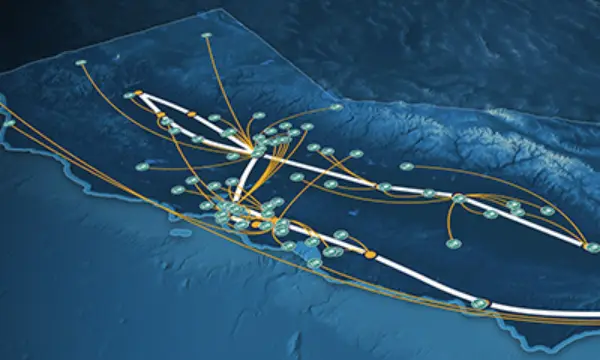
CENIC member benefits including improved bandwidth and better vendor management at far less cost have made possible the San Joaquin Valley Library System's recent large-scale deployment of indoor and outdoor Wi-Fi at its many locations.

Digital Navigators at California’s Public Libraries Help Bridge Broadband Divide
Libraries educate Californians on how to navigate the Internet, providing access to employment and training, telehealth, and more. To ensure that patrons can use these opportunities, libraries also provide digital navigators to assist patrons in acquiring digital skills.

Wireless on the Edge: Connecting Hard-to-Serve Areas
Hard-to-reach areas may require wireless edge networks to connect to a middle-mile backbone. Tradeoffs in frequency, license status, and power can make it challenging to determine the best solution.

Responding to disasters: the CENIC community’s role in response and recovery
Fires, floods, earthquakes, and now pandemics have become part of the landscape for Californians in this second decade of the 21st Century.

Libraries Are Key to Providing Broadband Access to California Communities
We live in an increasingly interconnected world, and to fully participate in it—whether that means searching for information online, distance learning, or interviewing for a job on Zoom—requires ever-increasing bandwidth. Unfortunately, approximately one in eight households in California lacks high-speed Internet access, with the digital divide having a disproportionate impact on people of color and low-income and rural households.

Network Traffic Analysis Shows Changing Activity Patterns During COVID-19 Pandemic
Even as campuses, schools, libraries, and cultural institutions have closed amid stay-at-home orders, CENIC’s networks have remained a vital part of the Internet ecosystem for online learning and community engagement, remote access to research data and specialized computing facilities, academic medicine and clinical care, and work-from-home operations.
Understanding Network Impacts of Increased Online Learning
While COVID-19 is creating unprecedented uncertainty, Research and Education Networks such as CENIC's CalREN will play an important role in supporting our educational institutions as they increasingly move to online learning. CENIC has prepared this information as a resource for members who have moved to, or are contemplating moving to, online instruction.