




Blog: Category Archives: University of California
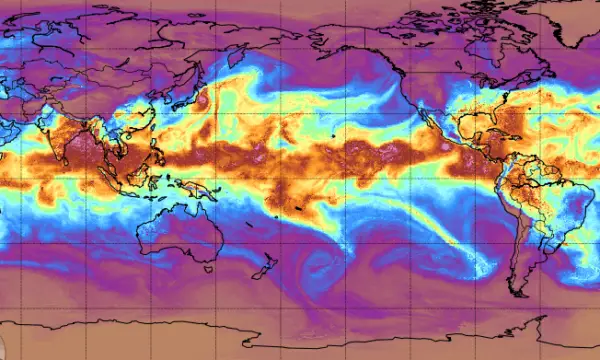
UC San Diego’s GAIA Initiative Promises Transformation of Atmospheric and Climate Research
The realization that predictive climate research could be transformed by networked compute and data resources led to a breathtaking variety of research institutes in California. The next step is to accelerate this transformation by coordinating the institutes themselves so that they can each act as force multipliers for one another and for atmospheric, ocean, and climate research as a whole. That is the purpose of UC San Diego’s GAIA Initiative.

CENIC Members Doing the Impossible in Weather and Climate Forecasting with CENIC AIR and Advanced Networks
Vastly improved bandwidth and the emergence of AI-enabled tools—such as those made possible for CENIC members with CENIC AIR and NRP—have created a whole new era in weather prediction, climate modeling, and disaster preparedness.

The CENIC AI Resource Powers Diverse Disciplines at CENIC Member Campuses
Learn how researchers at non-R1 institutions or those who need only a handful of GPUs can benefit from CENIC AIR, which can catapult their work to the next level and enable them to collaborate and compete with peers from larger, better-resourced institutions.
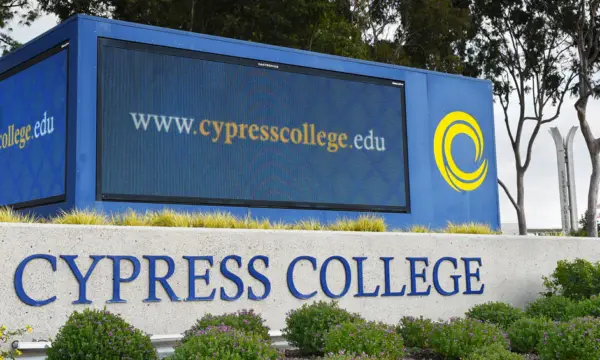
Celebrating Dr. Ben Izadi’s Leading Role in the CENIC and Cypress College Student Internship Program
Now in its 15th year, the CENIC internship program has given more than 100 students hands-on training and real experience in advanced networking, developed in partnership with Cypress College’s Professor Ben Izadi, who was instrumental in its success.

California at the Vanguard of AI-Enabled Education for All with CENIC AIR
At CENIC's recent biennial conference, San Diego Supercomputer Center Director Frank Wuerthwein discussed the revolutionary new model of education made possible by AI, data, and compute resources like those enabled by the CENIC AI Resource.

CENIC and San Diego Supercomputer Center Create Sustainable Agriculture for California’s Future
CENIC’s networking and services, including CENIC AIR, can be a vital part of preparing new generations of farmers that will apply the latest technology to agriculture by turning the farm into an educational setting and improving the efficiency of farming as a career.

CENIC Members Enable Data-Driven Agriculture: Optimizing Harvests in a Changing Environment
The use of technology in agriculture to increase yield and decrease resources is the focus of an innovative project fueled by CENIC and its collaborative partners: a novel model of precision agriculture in the vineyards.

Advancing AI for California’s Community Colleges through Collaboration Across the CENIC Membership
It’s been eight months since the San Diego Community College District connected to CENIC AIR—and CENIC membership was essential at every step of the way.
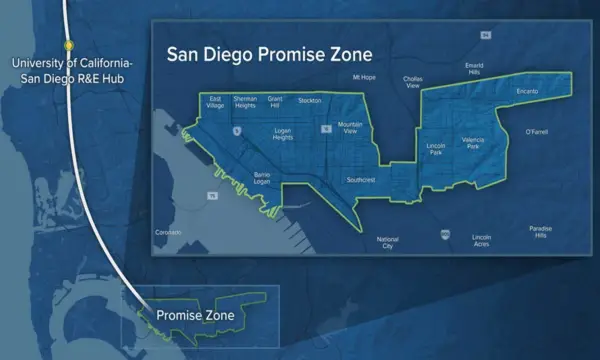
The San Diego Promise Zone: Connecting Potential with Promise
The San Diego Promise Zone: Connecting Potential with Promise When parts of San Diego became one of the twenty-two federally designated Promise Zones in the U.S., the community came together in creative ways to improve the quality of life for all Zone residents. The focus of the initiative is to increase access to everything from affordable housing to jobs, safe environments, educational opportunities, healthcare, and economic activity.
PRP: Fulfilling the Promise of Collapsing Space and Time
The Pacific Research Platform (PRP) was originally conceived in 2014 by member institutions of CENIC, the Corporation for Education Network Initiatives in California, as a way to support data-intensive research projects. The challenge was to connect multiple researchers located in multiple locations who require rapid access to dispersed datasets. It has become a significant force in developing an entirely new model of cyber-infrastructure ecology.