




Blog: Category Archives: Independent Universities

The CENIC AI Resource Powers Diverse Disciplines at CENIC Member Campuses
Learn how researchers at non-R1 institutions or those who need only a handful of GPUs can benefit from CENIC AIR, which can catapult their work to the next level and enable them to collaborate and compete with peers from larger, better-resourced institutions.
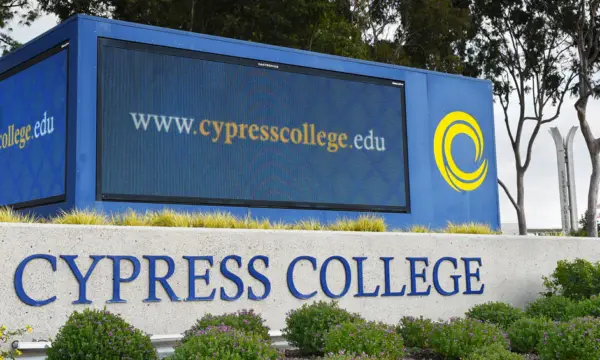
Celebrating Dr. Ben Izadi’s Leading Role in the CENIC and Cypress College Student Internship Program
Now in its 15th year, the CENIC internship program has given more than 100 students hands-on training and real experience in advanced networking, developed in partnership with Cypress College’s Professor Ben Izadi, who was instrumental in its success.

California at the Vanguard of AI-Enabled Education for All with CENIC AIR
At CENIC's recent biennial conference, San Diego Supercomputer Center Director Frank Wuerthwein discussed the revolutionary new model of education made possible by AI, data, and compute resources like those enabled by the CENIC AI Resource.

AI-Enabled Fiber-Optic Geodesy: CENIC Networking and Services Enable Cutting-Edge Seismology
Using Caltech's Zhan Group of Observational Seismology as an example, you can learn how CENIC members and CENIC AIR participants have much of what they need to carry out cutting-edge AI-enabled vulcanology and seismology.

Solving Network Connections for USC on Catalina Island
CalREN connection and resiliency for USC's Wrigley Institute for Environmental Studies and its Marine Science Center on Catalina Island

Network Traffic Analysis Shows Changing Activity Patterns During COVID-19 Pandemic
Even as campuses, schools, libraries, and cultural institutions have closed amid stay-at-home orders, CENIC’s networks have remained a vital part of the Internet ecosystem for online learning and community engagement, remote access to research data and specialized computing facilities, academic medicine and clinical care, and work-from-home operations.

Zero-Trust Networking Enhances Security in Research and Education Environments
Zero-trust networking may be uniquely capable of tackling the security issues confronted by R&E environments. Experts from Google, Netflix, the UC Office of the President, San Bernardino County schools, and the San Francisco Library weigh in on security challenges and solutions.

Collaboration Kept Pepperdine Connected During Wildfires
With the Woolsey wildfire closing in on its campus, Pepperdine University worked with CENIC to save critical internet service and keep the university’s communication lines open for parents, students, faculty, and staff to stay informed during the emergency. Engineers responded quickly, many volunteered to help, and partners collaborated with agility.

Leading the Charge on Science DMZs to Support Big-Data Research
Scientists working in fields such as genomics, climate science, and galaxy exploration accumulate huge data sets that require high-performance computer networking. Science DMZs and the Pacific Research Platform enable researchers to collaborate securely on these data sets from far-flung locations. Learn how UC Santa Cruz developed its cyberinfrastructure.
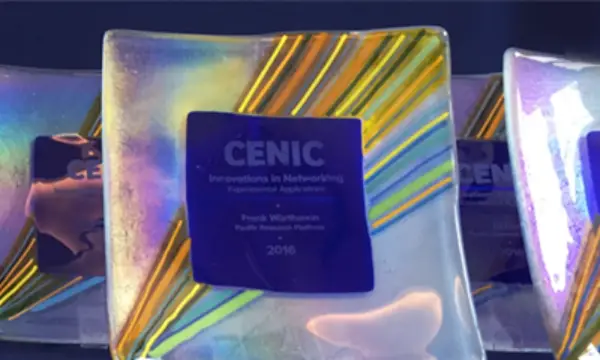
CENIC Presents Innovations in Networking Awards
Each year CENIC presents the Innovations in Networking Awards to highlight the exemplary innovations that leverage ultra-high bandwidth networking, particularly where those innovations have the potential to transform the ways in which instruction and research are conducted or where they further the deployment of broadband in underserved areas.