


The CENIC Community Technology Affinity Group (C2TAG) is an evolution of the CENIC Technical Advisory Committee (TAC), which was created for members to provide technical guidance to CENIC, helping architect the original iteration of the network. As CENIC grew, the need for technical guidance from our members lessened, and the TAC evolved into a group of IT professionals that met quarterly to receive updates from CENIC engineers and discuss technology trends.
The C2TAG will continue this tradition and provide additional value for CENIC members.
The C2TAG is a forum for representatives from all CENIC member segments to share information and expertise about network technologies, creating a community of like-minded professionals who serve their colleagues as trusted advisors. It also allows members to engage CENIC staff and explore recently deployed network services and their applications among CENIC segments.
By joining the C2TAG, technology professionals are connected to a network of their peers in an informal setting. Through our mailing list, Slack, and various meetings, we share best practices, discuss problems and solutions, and gain valuable insights into industry trends.

Inside the C2TAG
Inside the C2TAG you will find video and meeting notes from the member meetings. This page is restricted to members, you may access it using the password shared with you when you joined. If you are a member needing access or would like to join, please contact engagement@cenic.org.

Read the C2TAG Charter
Learn about the history and purpose of the C2TAG as well as who can join, what it does and does not do, and its code of conduct.
Steering Committee
The C2TAG is governed by a Steering Committee, with representation from every CENIC segment. Steering Committee membership is voluntary and members commit to a two-year term. There is no limit on how many consecutive terms members can serve.
Steering Committee Members include:
|
|
Blog posts about Technology & Innovation
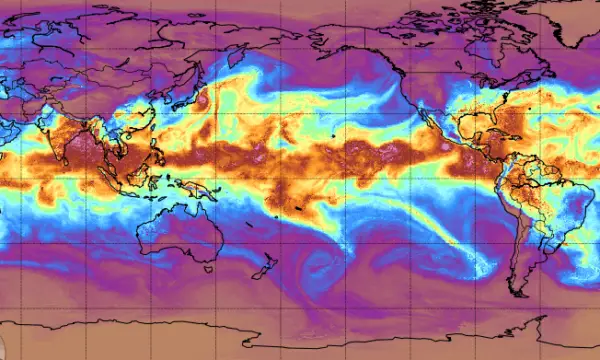
UC San Diego’s GAIA Initiative Promises Transformation of Atmospheric and Climate Research
The realization that predictive climate research could be transformed by networked compute and data resources led to a breathtaking variety of research institutes in California. The next step is to accelerate this transformation by coordinating the institutes themselves so that they can each act as force multipliers for one another and for atmospheric, ocean, and climate research as a whole. That is the purpose of UC San Diego’s GAIA Initiative.

CENIC Members Doing the Impossible in Weather and Climate Forecasting with CENIC AIR and Advanced Networks
Vastly improved bandwidth and the emergence of AI-enabled tools—such as those made possible for CENIC members with CENIC AIR and NRP—have created a whole new era in weather prediction, climate modeling, and disaster preparedness.

Reimagining Supercomputing with the Distributed Bring-Your-Own-Resources Model
As society becomes more reliant on large-scale supercomputing centers for compute and storage, the costs associated with them have become a topic of discussion. One innovative hypercluster model—a distributed one—provides an alternative approach.