




Frank Wuerthwein & UC San Diego Team Recognized with 2026 CENIC AIR Award for Innovative Technical Design & Instructional Support
La Mirada, CA & San Francisco, CA — March 5, 2026 — The Corporation for Education Network Initiatives in California (CENIC) is pleased to announce that Frank Wuerthwein, Executive Director of UC San Diego’s San Diego Supercomputer Center and his team will be recognized with the 2026 CENIC AIR Award for Innovative Technical Design & Instructional Support. The award will be presented at CENIC’s biennial conference “The Right Connection” to be held from March 31–April 1, 2026 in Monterey, CA.
The impressive UC San Diego team being honored is led by Wuerthwein and includes Tom DeFanti, John Graham, Dima Mishin, Mohammad Sada, Mahidhar Tatineni, Tom Hutton, Daniel Diaz, and Adam Tilghman.
Their work has elevated the value and usability of the CENIC AI Resource (CENIC AIR) as an important tool for promoting AI research and education for all California higher education institutions. The UCSD team’s diligence in making Large Language Models accessible, developing the necessary documentation, and providing tutorials for all levels of users has created democratic access to AI research and education in California, providing an inspired model for other states and regions to emulate.
Their work in supporting new hardware, including drones, IoT devices, and FPGAs, has provided the CENIC community, both faculty and students, with access to innovative tools. They have developed inspired storage strategies, which are equally notable, as they have enabled CENIC AIR users, who lack access to such resources, to be full participants in applications of AI across multiple disciplines.
It’s clear that CENIC AIR could not exist, and could not have advanced and expanded the use of AI, without the investment of time, creativity, and plain old hard work of Frank and his team of professionals.
Related blog posts
UC San Diego’s GAIA Initiative Promises Transformation of Atmospheric and Climate Research
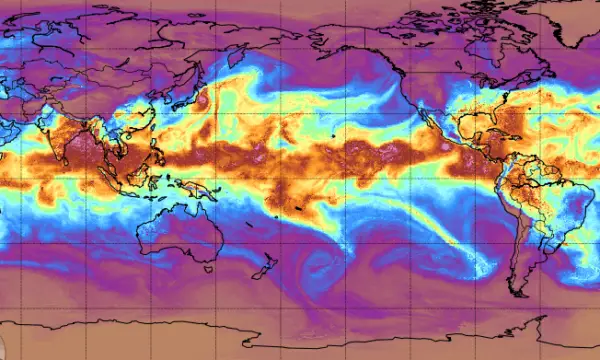
The realization that predictive climate research could be transformed by networked compute and data resources led to a breathtaking variety of research institutes in California. The next step is to accelerate this transformation by coordinating the institutes themselves so that they can each act as force multipliers for one another and for atmospheric, ocean, and climate research as a whole. That is the purpose of UC San Diego’s GAIA Initiative.

CENIC Members Doing the Impossible in Weather and Climate Forecasting with CENIC AIR and Advanced Networks
Vastly improved bandwidth and the emergence of AI-enabled tools—such as those made possible for CENIC members with CENIC AIR and NRP—have created a whole new era in weather prediction, climate modeling, and disaster preparedness.

Recent blog posts
UC San Diego’s GAIA Initiative Promises Transformation of Atmospheric and Climate Research
Reimagining Supercomputing with the Distributed Bring-Your-Own-Resources Model
The CENIC AI Resource Powers Diverse Disciplines at CENIC Member Campuses
Experts Review Developments in Federal Funding Landscape at CENIC 2026 Conference
Subscribe to our newsletter
Stay up to date on news and stories from the CENIC community.