




Experts Review Developments in Federal Funding Landscape at CENIC 2026 Conference

In Brief
- Federal funding landscape changes for educational networking
- Face-to-face meetings ensure that busy legislators understand the topic
- Funding for cybersecurity of keen interest
- Program reforms target balance of different technologies
- Screen time concerns for schools influencing E-Rate
What's Next
- FCC reviewing E-Rate program support and educational outcomes
- Provide your E-Rate feedback to Congress at SHLB website
- Stay up to date with SHLB and CENIC
It has become increasingly difficult to keep up with technology policy and federal funding issues in recent years. However, those who attended the 2026 CENIC biennial conference, The Right Connection, heard from top policy analysts stressing that building and sustaining relationships with representatives and agencies in D.C. remains as important as ever.
“SHLB’s work is about ensuring that community anchor institutions have a seat at the table to help people understand the importance of sustainable, affordable, and reliable access to the Internet,” said Kristen Corra, Policy Counsel for the Schools, Health, and Libraries Broadband Coalition (SHLB). “By bringing stories to Congress and meeting with representatives and staff, we can show them why programs like E-Rate and Rural Health Care support critical broadband funding for schools, libraries, and rural healthcare clinics.”
Corra was joined on the panel by Philip Neufeld, Executive Officer for Strategic Research and Policy Analysis at Fresno Unified School District; Beverly Sutherland, President of EdTechnologyFunds, Inc., a leader in promoting equitable broadband policy and access; Luis Wong, CEO of the California K–12 High Speed Network and the California Library Connect project; and moderator Rachelle Chong, a leading national regulatory communications expert with extensive experience in both federal and state telecommunications policy and advocacy.

Relationships Are Key for Congressional Conversations
Chong underscored the importance of having relationships with congressional members to share stories, data, and the economic impact of Universal Service Fund (USF) dollars.
As federal funding is being pulled back for programs such as school bus Wi-Fi and hotspot lending efforts, Corra noted that the annual trips to Capitol Hill, called SHLB fly-ins, have been effective in bringing stories of impact directly to federal representatives and staff.
“We have more than 500 stories to tell as we’ve been involved for twelve years in the hardship cases in California with the schools that have poor connectivity and libraries as well,” said Wong. “And we bring the simple message to Washington that we are not done yet, in that there are schools and libraries without access to high-speed broadband.”
“In addition to sharing stories, we were able to explain how the programs work, and what aspects could be streamlined and modernized to align with today’s educational and service needs. We also discussed why connectivity programs like E-Rate matter for communities from an economic development and workforce perspective,” said Corra. “Our fly-in contingent met with nearly 90 Congressional staff members during our time in D.C.”
The panel provided updates on last year’s Supreme Court ruling that upheld the constitutionality of the USF and its management by the Federal Communications Commission (FCC). The Court ruled that the FCC had appropriately delegated its authority to the private, nonprofit Universal Service Administrative Company (USAC) to perform administrative functions, including preparing the financial projections used to calculate quarterly contribution factors. This is permissible because the FCC retains ultimate authority and oversight. The decision preserves the existing USF funding mechanism and provides greater certainty for the continued operation of the programs while broader discussions about long-term USF reform continue.
At this point, telecom carriers continue to pursue USF contribution reform via congressional action. With contribution factors remaining at historically high levels, the debate has centered on whether the contribution base should be expanded beyond traditional telecommunications carriers to include broadband internet providers or other communications services.
Eager for Funding to Strengthen Cybersecurity
Funding and programs involving cybersecurity were up for discussion as well.
“Back in 2024, the FCC proposed a $200 million pilot program over three years to help with cybersecurity for schools,” said Beverly Sutherland. “More than 2,700 applications were submitted, seeking $2.7 billion.”
In January 2025, the program awarded funds to 700 of those applicants.
“Only about 14% of the funds have gone out the door so far,” noted Sutherland. “We have a long way to go.”
When asked whether she was concerned about the gap in apparent need and the speed of funding being sent to applicants, Sutherland said, “Yes, we are. And it’s raising the question of whether we wait three years to analyze the data of the few programs funded, or whether we learn something from the oversubscription to the program. Hopefully, we can really home in on some early data to eliminate more of the gap.”
Chong noted that the E-Rate filing deadline occurred during the conference, and that was another area experiencing change under the current administration.
“When the FCC released the draft eligible services list for Funding Year 2026, it asked questions about basic maintenance of internal connections and managed internal broadband services,” said Corra. “Some of those questions remain pending.”

Funding Programs Balancing Choices of Technology
Panelists discussed the Broadband Equity, Access, and Deployment (BEAD) infrastructure program, a $42 billion program funded during the Biden administration and voted in following the pandemic. Now, there are efforts to reform how that money is spent and whether it should focus on fiber, wireless, or other technologies. In addition, the Trump administration is seeking a new round of bids to review how those funds are being disbursed.
Another federal program funded at the same time as BEAD, the Digital Equity Act (DEA), focused on digital inclusion. Although funding for digital inclusion or digital equity programs under the DEA has since been cut, removing $1.4 billion from California alone, there have been some creative efforts to sustain the work.
“Sunne McPeak at the California Emerging Technology Fund has been intervening in telecom company mergers to obtain voluntary donations for Digital Inclusion programs, to replace the Digital Equity Act funding canceled by the Trump Administration,” noted Chong.

E-Rate Faces New Scrutiny amid Growing Concerns
Philip Neufeld noted that screen time controversies for K–12 schools are occupying legislators’ time. “A year ago, there was a push about screen time versus board time in the classroom. That was mostly focused on social media use, but it potentially affected E-Rate funding. Now, Congress is holding hearings on these issues.”
“If you want to further understand many of the concerns being aired in Washington, follow Senator Ted Cruz and his citing of Jonathan Haidt’s writing on screen time for our nation’s children,” said Neufeld.
Since the conference, policymakers have been at work. The FCC issued a Notice of Proposed Rulemaking (NPRM) launching a comprehensive review of the E-Rate program at the beginning of June. The proceeding seeks comment on a myriad of topics, including whether the E-Rate program has met Congress’s objectives and whether it should be terminated or limited in scope. It also asks whether increased connectivity via E-Rate in schools has contributed unintentionally to excessive device use. Stakeholders, including SHLB, are closely monitoring the proceedings, as any resulting changes could affect the program’s scope and continuation, eligibility, funding priorities, and the overall administration of E-Rate in the coming years.
Those interested in staying up to date on all of these policy and funding issues were encouraged to subscribe to SHLB’s updates via shlb.org and participate in its annual conference where presentations dig deeper into these topics. SHLB has also created a dedicated webpage regarding the E-Rate item. It includes resources for stakeholders who wish to provide their own feedback to Congress or the FCC.
Related blog posts

The CENIC AI Resource Powers Diverse Disciplines at CENIC Member Campuses
Learn how researchers at non-R1 institutions or those who need only a handful of GPUs can benefit from CENIC AIR, which can catapult their work to the next level and enable them to collaborate and compete with peers from larger, better-resourced institutions.
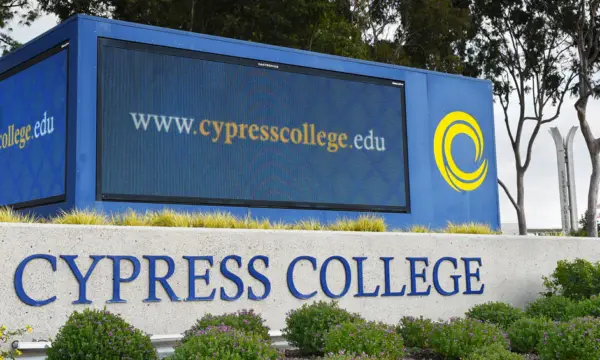
Celebrating Dr. Ben Izadi’s Leading Role in the CENIC and Cypress College Student Internship Program
Now in its 15th year, the CENIC internship program has given more than 100 students hands-on training and real experience in advanced networking, developed in partnership with Cypress College’s Professor Ben Izadi, who was instrumental in its success.

Recent blog posts
UC San Diego’s GAIA Initiative Promises Transformation of Atmospheric and Climate Research
Reimagining Supercomputing with the Distributed Bring-Your-Own-Resources Model
The CENIC AI Resource Powers Diverse Disciplines at CENIC Member Campuses
Experts Review Developments in Federal Funding Landscape at CENIC 2026 Conference
Subscribe to our newsletter
Stay up to date on news and stories from the CENIC community.