



CENIC Welcomes San Diego Supercomputer Center Director Frank Würthwein to Board of Directors as Science Advisor
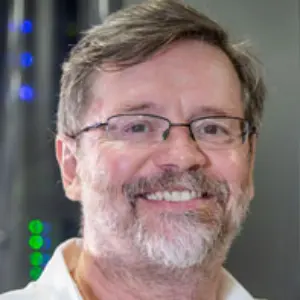
CENIC is delighted to welcome Frank Würthwein as Science Advisor to the CENIC Board of Directors, starting in the 2026-27 fiscal year.
Frank is the Director of the San Diego Supercomputer Center and also holds faculty appointments at UC San Diego in the Physics Department and the Halıcıoğlu Data Science Institute. After receiving his PhD from Cornell in 1995, he held appointments at Caltech, MIT, and Fermi National Laboratory before joining the UC San Diego faculty in 2003.
Würthwein’s research focuses on globally distributed compute and data systems (e.g., the Open Science Grid, the National Research Platform, and the Open Science Data Federation), experimental particle physics, and distributed high-throughput computing. As an experimentalist, his interest in instrumentation and data analysis has led him to the development, deployment, and operation of worldwide distributed computing systems to process and analyze large data volumes over the last several decades. In 2010, "large" data volumes were measured in petabytes. By 2030, they are expected to grow to exabytes.
Würthwein is a dedicated proponent of the educational mission of the CENIC AI Resource (CENIC AIR) and, through it, the role that the CENIC membership will play as a driver of economic impact through engagement among community colleges, CSUs, and their local industries.
“In the end,” Würthwein believes, “it’s all about social mobility and spreading AI education and experiential learning that prepares students for good jobs in their communities across all of California.”
Wurthwein supports the power of CENIC AIR to reimagine precision agriculture by blurring the lines between farm, classroom, and laboratory. He advocates for the tech-related economic benefits that can accrue to rural regions and not just large urban centers, while enabling agriculture to adapt to changing weather and climate conditions.
On behalf of the CENIC community, welcome to this important role, Frank! We’re delighted that our member institutions will benefit from your insight through your participation on our Board of Directors!
Related blog posts
CENIC Perspectives: Hybrid Approach to Last-Mile Connectivity Should Include Wireless
As we are entering a moment where decisions are being made about state and federal broadband resources, policymakers should focus on standards for what constitutes broadband rather than the specific technology chosen for last-mile infrastructure.
Progress Towards “Future-Proofing” CENIC’s Network
In support of CENIC’s new spectrum service offering, engineers worked creatively to overcome obstacles posed by the ongoing pandemic including remote collaboration and supply chain slowdowns. The team successfully augmented the spectrum termination capabilities in Los Angeles and in Sunnyvale by 16 flexible grid capable ports, each with the capacity to terminate services between 100G and 800G. This new infrastructure is capable of supporting colorless, directionless, and contentionless (CDC) technologies, which are prerequisites for enabling software provisioning in the optical layer.

Recent blog posts
UC San Diego’s GAIA Initiative Promises Transformation of Atmospheric and Climate Research
Reimagining Supercomputing with the Distributed Bring-Your-Own-Resources Model
The CENIC AI Resource Powers Diverse Disciplines at CENIC Member Campuses
Experts Review Developments in Federal Funding Landscape at CENIC 2026 Conference
Subscribe to our newsletter
Stay up to date on news and stories from the CENIC community.