





NSF Project Sets Up First Machine Learning Cyberinfrastructure – CHASE-CI
"Adding machine learning capabilities to the Pacific Research Platform is the next logical step in enabling distributed data-intensive application teams. All of this community cyberinfrastructure is only possible because we can build on the world-class CENIC regional optical network." - Larry Smarr, Director Calit2
The National Science Foundation has issued a $1 million grant to Larry Smarr, director of Calit2, and his colleagues to create a community cyber infrastructure in support of machine learning research. The innovative project– Cognitive Hardware and Software Ecosystem, Community Infrastructure (CHASE-CI) – is intended to leverage the high-speed Pacific Research Platform (PRP) to address machine learning and its distinct hardware, software, and architecture needs.
Read the full HPC wire article here >
Related blog posts
UC San Diego’s GAIA Initiative Promises Transformation of Atmospheric and Climate Research
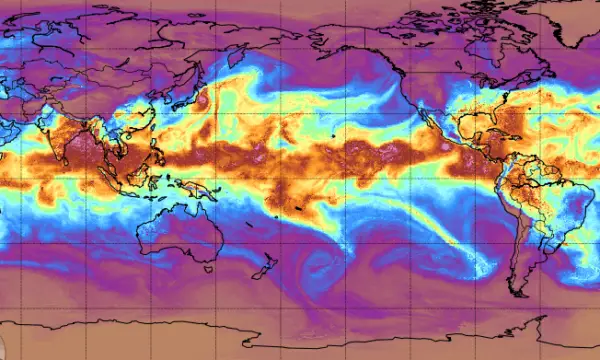
The realization that predictive climate research could be transformed by networked compute and data resources led to a breathtaking variety of research institutes in California. The next step is to accelerate this transformation by coordinating the institutes themselves so that they can each act as force multipliers for one another and for atmospheric, ocean, and climate research as a whole. That is the purpose of UC San Diego’s GAIA Initiative.

CENIC Members Doing the Impossible in Weather and Climate Forecasting with CENIC AIR and Advanced Networks
Vastly improved bandwidth and the emergence of AI-enabled tools—such as those made possible for CENIC members with CENIC AIR and NRP—have created a whole new era in weather prediction, climate modeling, and disaster preparedness.

Recent blog posts
UC San Diego’s GAIA Initiative Promises Transformation of Atmospheric and Climate Research
Reimagining Supercomputing with the Distributed Bring-Your-Own-Resources Model
The CENIC AI Resource Powers Diverse Disciplines at CENIC Member Campuses
Experts Review Developments in Federal Funding Landscape at CENIC 2026 Conference
Subscribe to our newsletter
Stay up to date on news and stories from the CENIC community.